Award-Winning Japanese Sake for International Distribution
Diverse Flavours represents three distinguished Japanese sake breweries in international markets: Sakuramasamune from Hyogo, Kinshi Masamune from Kyoto and Koshitsukano from Niigata.
We help duty-free operators, travel retailers, importers and distributors access a diverse portfolio of premium Japanese sake through a single experienced international partner. Buyers can consolidate products from multiple breweries, simplifying sourcing, communication and export arrangements.
Together, the three breweries introduce drinkers and buyers to different regional expressions of Japanese sake, from Hyogo and Kyoto to Niigata.
Our Japanese brewery partners
Our distinguished portfolio includes ranges from the Sakuramasamune (Hyogo), Kinshi Masamune (Kyoto) and Koshitsukano (Niigata) breweries.


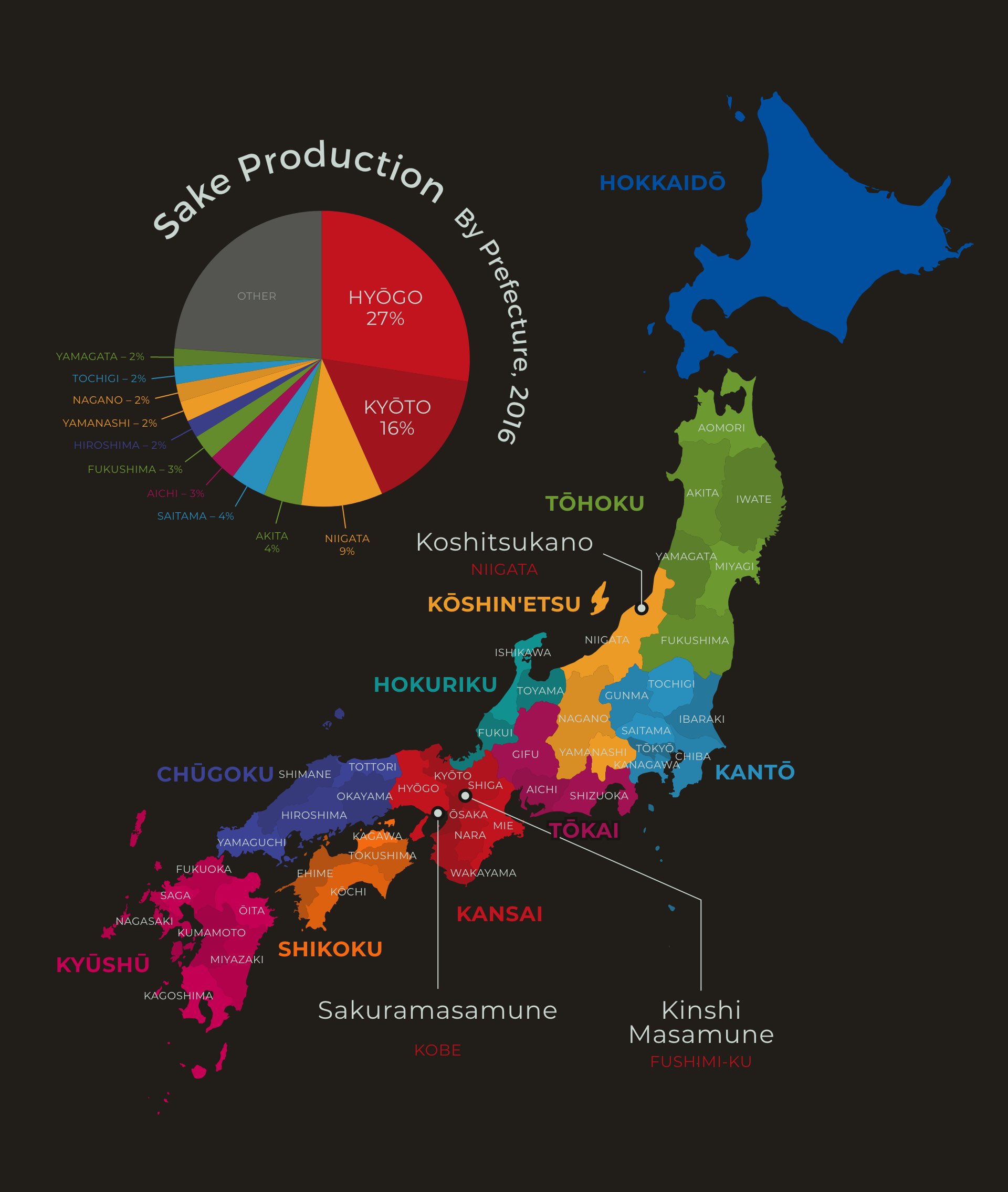
Sake brewing regions
Japan’s regional brewing traditions have been shaped by local water, climate, rice and generations of accumulated knowledge.
Diverse Flavours works with three Japanese sake producers from three important brewing regions.
What is Japanese sake?
Japanese sake is a fermented alcoholic drink made primarily from rice, water, koji and yeast. In Japan, it is commonly known as nihonshu, meaning “Japanese alcohol”, while the word sake can refer more generally to alcoholic drinks.
Sake is sometimes described as rice wine, but its production is quite different from winemaking. Grapes contain sugars that yeast can ferment directly. Rice contains starch, which must first be converted into sugar before fermentation can begin.
This conversion is made possible by koji, one of the most important elements in sake brewing. The koji and yeast work alongside one another, continuously converting starch into sugar and sugar into alcohol. This process, known as multiple parallel fermentation, gives sake its distinctive character and typically produces a drink containing around 14% to 16% alcohol when bottled.
Although the ingredients appear simple, their selection and treatment create an extraordinary variety of styles. The rice variety, polishing ratio, water, koji, yeast, fermentation temperature and decisions made by the brewer can all influence the final aroma, flavour and texture.
How is sake made?
Sake brewing is a careful combination of agriculture, microbiology, craftsmanship and time. The precise process varies between breweries, but most sake follows the same essential journey.
Polishing the rice
Before brewing, the outer layers of rice are removed. This reduces proteins, fats and minerals that can affect flavour. The more the rice is polished, the lighter and more aromatic the sake tends to be.
Washing and soaking
The polished rice is washed to remove residue, then soaked to absorb a controlled amount of water. Timing is especially precise for highly polished rice.
Steaming
Rice is steamed rather than boiled, creating a firm exterior and soft core ideal for koji activity. Some is used for koji, the rest for fermentation.
Making the koji
Koji mould is cultivated on steamed rice in warm, humid conditions. It produces enzymes that convert rice starch into fermentable sugars, shaping flavour and aroma.
Preparing the fermentation starter
Rice, koji, water, yeast and lactic acid are combined to build a healthy yeast culture and prevent unwanted microbes. This stage can take weeks or be done more quickly with modern methods.
Main fermentation
The starter is moved to a larger tank and more rice, koji and water are added in stages. Over several weeks, enzymes create sugar while yeast converts it into alcohol in the same tank.
Pressing and finishing
After fermentation, the liquid is separated from solids and may be filtered, rested, pasteurised, diluted or aged. These choices determine whether the final sake is crisp, rich, cloudy or fresh.
The four essential ingredients
Sake is made from four principal ingredients: rice, water, koji and yeast. The quality and treatment of each contributes to the final character of the drink.

Rice
Both specialist sake rice and table rice can be used. Sake rice (shuzō-kōtekimai) has larger grains and a starchy core called shinpaku, making it easier to polish and ferment.
Rice variety influences style, but flavour also depends on origin, polishing and brewing methods.

Water
Water is the main component of sake and is used throughout brewing.
Its mineral content affects fermentation: harder water can speed it up, while softer water creates a gentler style.
Many sake regions developed around high-quality water sources.

Koji
Koji is rice inoculated with Aspergillus oryzae mould. It produces enzymes that convert rice starch into sugar.
It is essential for fermentation and also influences sweetness, acidity, aroma and body.
Yeast
Yeast turns sugar into alcohol and creates aroma compounds.
Different strains produce fruity, floral, or more restrained profiles. Lower fermentation temperatures are often used for delicate ginjo-style aromas.
Japanese sake grades explained
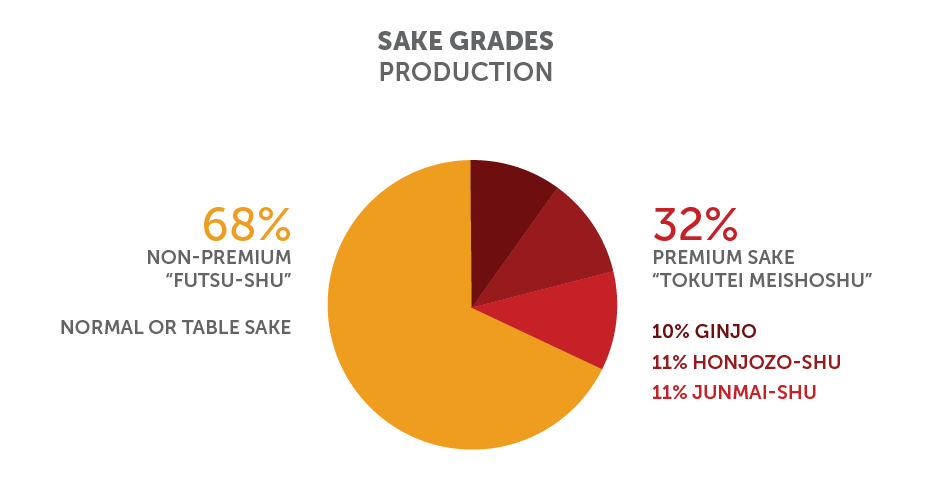
Sake is divided broadly into futsū-shu, or ordinary sake, and tokutei meishō-shu, a group of premium classifications sometimes translated as “special designation sake”.
The premium classifications are determined by the ingredients, polishing ratio and production methods used. They do not form a simple ladder from basic to best. Each category describes a style of production rather than providing a guarantee of personal preference.
Sake Grades
Premium Sake
There are six top premium sake grades which are known as “Tokutei Meishoshu” meaning “Special Designation Sake”.
| Grade | Name | Process | Rice Treatment |
|---|---|---|---|
| Premium Tokutei Meishoshu Sake
The top four grades are collectively known as “GINJO”, characterised by increasing quality, price and complexity and brewed by expert brewers with vast knowledge and experience. Ginjo grades use more highly milled (polished) rice, brewed at lower temperatures, longer fermentation and labour intensive methods of production. |
|||
| Ginjo | DAIGINJO-SHU 大吟醸酒 |
Generally light, complex and fragrant. Small amount of pure distilled alcohol is added. | Less than 50% of polished rice left (seimai-buai). |
| JUNMAI-DAIGINJO-SHU 純米大吟醸酒 |
Subclass of Daiginjo, as only rice water and koji (steamed rice) are used. | Less than 50% of polished rice left (seimai-buai). | |
| GINJO-SHU 吟醸酒 |
Light and delicate flavour, often fruity/flowery touches. Small amount of pure distilled alcohol is added. | 60% of polished rice left (seimai-buai). | |
| JUNMAI-GINJO-SHU 純米吟醸酒 |
Subclass of Ginjo-Shu, as only rice, water and koji are used. | 60% of polished rice left. | |
| HONJOZO-SHU 本醸造酒 |
Brewed using a very small amount of pure distilled alcohol. Lighter and often more fragrant than Junmai-Shu. Includes Tokubetsu HONJOZO (特別本醸造酒), or “SPECIAL” Honjozo, a vague definition indicating Honjozo made with special rice or more highly milled rice. | 70% of polished rice left. | |
| JUNMAI-SHU 純米酒 |
Made with nothing but rice, water and koji mold. Usually a bit fuller than other types, often with a good acidity. Includes Tokubetsu Junmai (特別純米酒). | ||
| Non-premium normal/table sake | |||
| FUTSU-SHU 普通酒 |
Pure, distilled alcohol is added in copious amounts to increase yields. | There are no special milling (polishing) requirements, and the rice used is typically of lower grades or normal table rice. | |
What does sake taste like?
There is no single flavour that defines sake. Its aromas and flavours depend on the rice, water, yeast, koji, brewing method, maturation and serving temperature.
| Sake Type | Aroma | Taste | Character |
|---|---|---|---|
| Full-bodied | Features a grainy scent, or an aroma conveying umami, like dairy products | Features sweetness, acidity, a pleasant bitterness, and a well-rounded richness | Rich taste, moderate aroma: Umami, Complex, Simple, Light |
| Light and smooth | Features a mild and moderate aroma | Has a refreshing taste and a smooth feeling in the mouth | Delicate taste, moderate aroma: Fresh, Simple, Light |
| Fruity | Features gorgeous aromas of fruit or flowers, and has a sense of clarity | Has moderate sweetness and roundness, balanced with a refreshing acidity | Delicate taste, complex aroma: Fresh, Simple, Complex, “Gorgeous” |
| Matured and complex | Features strong and complex aromas, like spices or dried fruit | Thick sweetness, balanced with an acidity mellowed by maturation | Rich taste, complex aroma: Umami, Complex, “Gorgeous” |
How to tell whether sake is sweet or dry
The Japanese sake meter value, or nihonshu-do, is often shown on technical sheets and sometimes on bottle labels. It measures the density of sake relative to water and can provide an indication of sweetness or dryness.
| TERM | MEANING | EXPLANATION |
|---|---|---|
| NIHONSHU-DO | A unique measure to indicate the specific gravity of sake | If the sake at 15 degrees Celsius weighs the same as water at 4 degrees its Nihonshu-do is 0 (zero).
A lighter specific gravity is indicated by a + (plus), a heavier one is indicated by a – (minus). Heavier sake contains more SUGAR thus – (minus) sake is sweet, + (plus) sake is dry. |
| SAN-DO | Acidity | Acidity makes sake taste strong, which masks its sweetness. This element in sake’s flavour is as important as nihonshu-do. |
|
AMINOSAN-DO |
Amino Acid Value | Sake with more amino acids tastes richer, with less amino acids tastes lighter. |

It should be noted that the alcohol content will change the specific gravity, so alcohol content must be noted. Further, the ACID content will mask the sweetness, which indicates the acidity or the dryness.
Should sake be served hot or cold?
Sake can be enjoyed across a wider temperature range than most alcoholic drinks. The idea that premium sake must always be served cold and cheaper sake warm is misleading.

Temperature changes the way a sake smells, tastes and feels:
These are starting points rather than strict rules. The brewery’s recommendation should take priority where it is available.
To warm sake, place it in a heat-resistant flask or tokkuri and stand the vessel in hot water. Gentle, gradual warming provides more control than placing the sake directly over heat.
A wine glass is useful for aromatic sake because its shape concentrates the aromas. Traditional ceramic cups can complement richer or warmed styles, while small glasses work well for comparing several sakes.
Sake and food pairing
Sake is closely associated with Japanese cuisine, but its moderate acidity, subtle sweetness and umami make it remarkably versatile.
The best pairings usually balance the weight and intensity of the sake with those of the dish.
Sushi, sashimi and seafood
Light, clean sake complements delicate fish without overwhelming it. Ginjo, junmai ginjo and dry regional styles can work particularly well with sushi, sashimi, oysters and simply prepared shellfish.
Grilled and roasted dishes
Junmai and honjozo can complement grilled fish, yakitori, roast chicken, pork and mushroom dishes. Their savoury character reflects the browned and roasted flavours in the food.
Rich and creamy food
Sake’s umami and gentle acidity can work well with creamy sauces, soft cheeses, gratins and buttery dishes. A rounded junmai or junmai ginjo is a useful place to start.
Spicy food
Chilled, lightly sweet or sparkling sake can soften the heat of spicy dishes. Try it with chilli, curry, Korean food or spicy Southeast Asian dishes.
Fried food
Clean, dry or sparkling sake can refresh the palate alongside tempura, fried chicken, fish and chips or other crisp, salty dishes.
Cheese
Sake pairs surprisingly well with cheese. Lighter aromatic styles suit fresh and soft cheeses, while rich junmai and aged koshu can accompany mature hard cheeses, washed-rind cheese and blue cheese.
Desserts
Sweet sake, sparkling sake and aged koshu can pair with fruit, custard, caramel, nuts or chocolate. The drink should usually be at least as sweet as the dessert.
Japanese sake export and distribution
Interest in Japanese sake continues to extend beyond Japan as more restaurants, retailers and consumers discover its range of styles and its versatility with food.
International buyers need to consider more than individual products. A sake portfolio may include different regions, price points, grades, bottle formats and flavour profiles to suit specialist retail, restaurants, gifting, duty-free and travel retail.
Diverse Flavours represents selected sake ranges from Sakuramasamune, Kinshi Masamune and Koshitsukano in international markets. Buyers can explore products from all three breweries through one point of contact.
For information about current markets, product availability, samples and distribution opportunities, contact the Diverse Flavours team.